
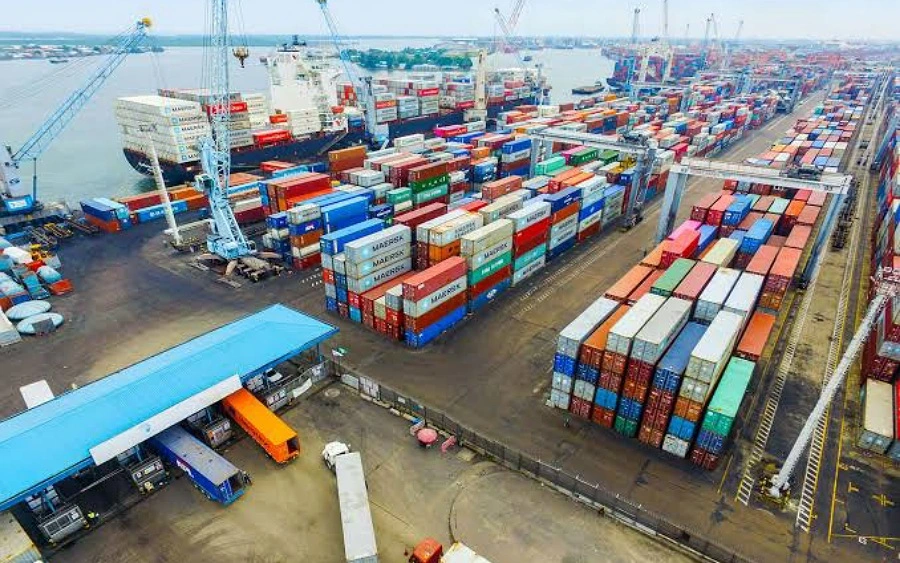

Nigeria’s export-driven trade recorded a notable increase in 2025, accounting for 39.0 percent of the country’s total cargo throughput.
This was revealed in the 2025 Operational Performance Report recently released by the Nigerian Ports Authority (NPA).
According to the report, total cargo throughput rose by 24.8 percent, increasing from about 103.6 million metric tons in 2024 to more than 129.3 million metric tons in 2025.
However, the report noted that import-dominated inward traffic still accounted for 59.2 percent of the total volume.
The report also pointed out that containerized cargo—an important indicator of export trade activity—recorded significant growth, as total container traffic climbed by 25.7 percent to exceed 2.1 million Twenty-foot Equivalent Units (TEUs).
Within the period reviewed, export containers grew by 3.1 percent, while containers carrying imports recorded a sharp rise of 32.8 percent.
A port-by-port breakdown showed that Lekki Port handled the largest vessels, with an average Gross Registered Tonnage (GRT) of 55,712, slightly above Onne Port, which recorded an average of 53,022 GRT. Apapa Port and Tin Can Island Port received ships with average GRTs of 33,251 and 36,909 respectively, while Delta Ports handled vessels averaging 17,414 GRT.
The report further indicated that Tin Can Island Port recorded the highest number of ship arrivals, accounting for 22.7 percent of total ship calls, while Lekki and Onne ports are increasingly attracting the industry’s “heavyweight” vessels.
Reacting to the report, the Managing Director of the NPA, Abubakar Dantsoho, expressed optimism that the next stage of growth would be driven by the Federal Government-approved port modernisation programme and the implementation of the National Single Window system.