
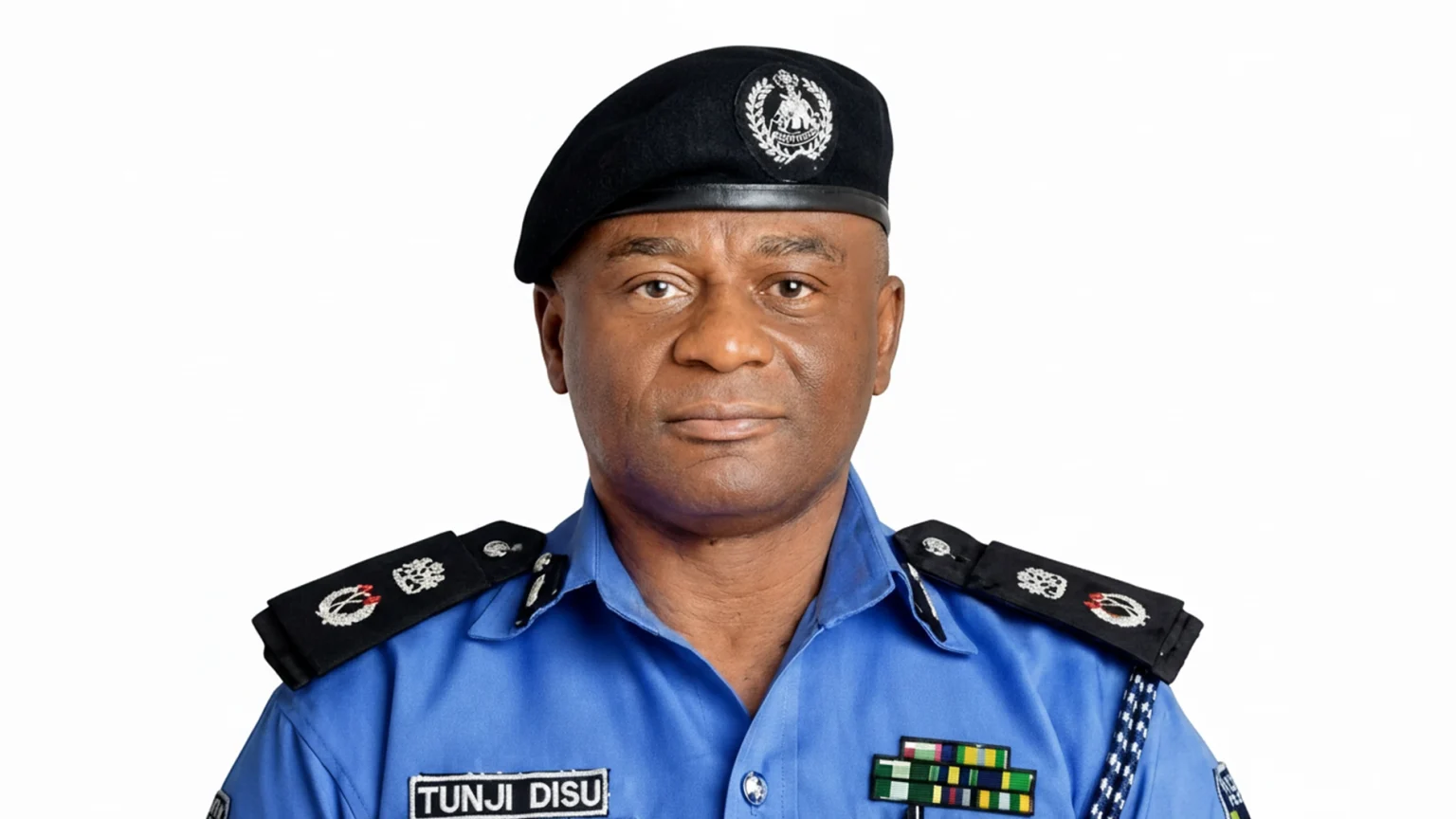

The Acting Inspector-General of Police, Tunji Disu, has set up a special committee to lead the process of implementing State Police and develop a new direction for policing in Nigeria.
The eight-member panel, comprising senior police officers, was announced shortly after Disu assumed office as the 23rd indigenous Inspector-General of Police. The initiative marks the start of practical moves toward decentralised policing across the country.
Disu held his first formal meeting with top officers of the Nigeria Police Force on Wednesday after the Nigeria Police Council approved his appointment.
Addressing officers during the inauguration, the IGP described the committee’s assignment as “significant and timely,” noting that it reflects the increasing calls for stronger internal security and policing that is more responsive to local communities.
“It is my greatest privilege to formally inaugurate this Committee on State Policing. The task before this committee is both significant and timely, as it speaks directly to the demand to strengthen Nigeria’s internal security and ensure that policing remains responsive to the realities of our communities,” Disu said.
He explained that Nigeria is confronting changing security threats that demand fresh ideas, stronger cooperation and meaningful reforms to improve policing capacity.
According to him, the committee carries an important responsibility in developing the framework that will guide how state policing will function.
“Your work will help shape the framework through which state policing may operate in Nigeria in a manner that strengthens, rather than fragments, our national security system,” he said.
Disu urged members to approach their duties with professionalism, fairness and a strong appreciation of the challenges of policing in a diverse country like Nigeria.
He said the committee would focus on reviewing existing policing models within and outside Nigeria, examining security needs and risks in communities nationwide, and proposing an operational structure for establishing and coordinating state police systems.
Other tasks include designing recruitment procedures, setting training standards, determining resource distribution, and creating effective accountability and oversight mechanisms to ensure professionalism and maintain public confidence.
The IGP also emphasised the advantages of decentralised policing if it is carefully planned and properly executed.
“By bringing law enforcement closer to the communities, state police institutions can deepen local knowledge of security dynamics and enable quicker and more targeted responses to emerging threats,” he said.
He further explained that decentralisation would enable state governments and local authorities to address security concerns within their territories more efficiently, while the federal government concentrates on wider national security matters.
Disu, however, assured officers and personnel of the Nigeria Police Force that the force’s constitutional role as the country’s primary law enforcement body remains unchanged.
He said the federal police would increasingly focus on complex and cross-border crimes such as terrorism, organised crime, cybercrime and trafficking networks that require nationwide coordination and specialised expertise.
“The vision we seek is one of synergy, not competition; partnership, not duplication,” the IGP stated.
He encouraged the committee members to carry out their responsibilities with dedication, intellectual depth and patriotism, noting that Nigerians have high expectations and that their recommendations will play a major role in shaping the future of policing in the country.
Disu then formally inaugurated the committee and wished members productive deliberations.