
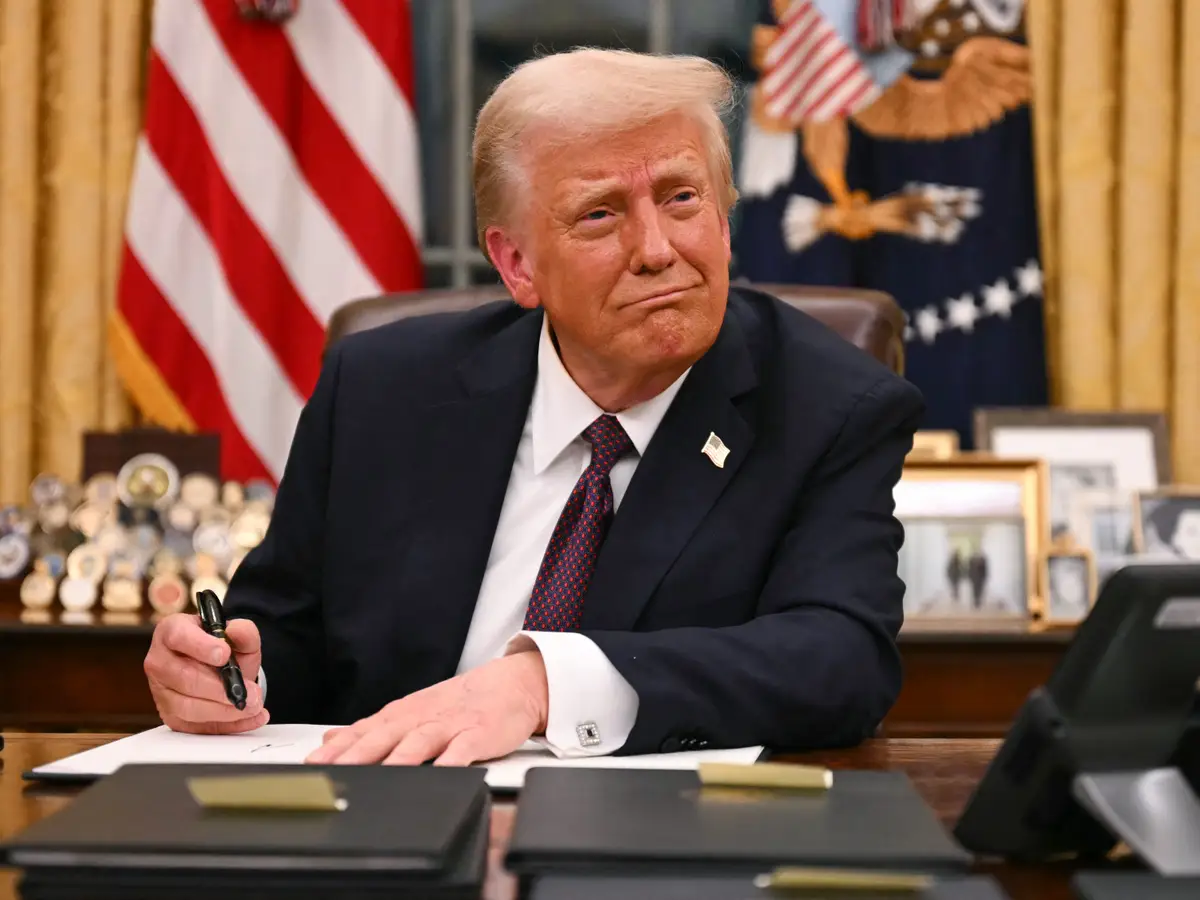

President Donald Trump has said the United States no longer requires support from NATO after several member countries declined his proposal for a multinational naval force to reopen the Strait of Hormuz, which has been shut by Iran.
Speaking to reporters from the Oval Office, Trump described the rejection as a “very foolish mistake,” adding that while many countries agree with the US position, they are unwilling to take action.
“Everyone agrees with us, but they are unwilling to assist. And we, as the United States, must keep this in mind because we find it quite shocking,” he said.
Trump argued that European nations should have deployed minesweepers to assist in securing the strait, noting that it was “not a big deal” but insisting it was unfair for the US to shoulder the responsibility alone.
He also criticised British Prime Minister Keir Starmer, expressing disappointment and suggesting that relations between the US and the UK had been better before Starmer assumed office.
During the briefing, Trump, wearing a green tie, gestured toward a bust in the Oval Office as he spoke.
His remarks followed comments by Starmer earlier in the week, where the UK leader stated that while Britain would take necessary steps to defend itself and its allies, it would not be drawn into a broader conflict. Sources within the British government also indicated that there were no plans to deploy UK naval vessels to the strait.
Several US allies have reportedly expressed concerns over Trump’s evolving justification for the ongoing US-Israeli conflict with Iran, which has now entered its third week.
In a previous post on his Truth Social platform, Trump also criticised countries such as Japan, Australia, and South Korea for declining to send warships.
“Due to our significant military success, we no longer ‘need,’ nor desire, the assistance of NATO countries _ WE NEVER DID!” he stated.
“Similarly, Japan, Australia, or South Korea.”
The comments come amid escalating tensions in the Middle East, where Iran has targeted commercial vessels in the Strait of Hormuz, disrupting oil shipments from parts of the Gulf and driving up global prices.